Showing posts with label Cultural Heritage. Show all posts

Wednesday, November 18, 2026

Basilica Cistern Preserves Istanbul’s Byzantine Waterworks


Basilica Cistern Preserves Istanbul’s Byzantine Waterworks

Built under Emperor Justinian I in the sixth century, the Basilica Cistern stored water beneath what is now Istanbul’s Historic Peninsula. The reservoir remained in use into the Ottoman period and underwent repairs during the reigns of Ahmed III and Abdülhamid II. mobile.aa.com.tr

The cistern reopened to visitors in July 2022 after its latest restoration. Two carved Medusa heads serve as column bases, one placed upside down and the other on its side. mobile.aa.com.tr

Anadolu Agency · Basilica Cistern Museum


Monday, November 16, 2026

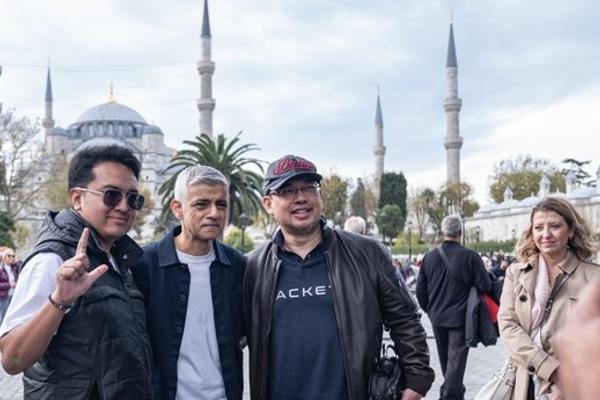
London Mayor Sadiq Khan visited Istanbul’s historic peninsula

 London Mayor Sadiq Khan explores Istanbul’s historic landmarks

London Mayor Sadiq Khan visited Istanbul’s historic peninsula, touring cultural landmarks and attending Friday prayers at Sultanahmet Mosque. Accompanied by Deputy Culture and Tourism Minister Coşkun Yılmaz, he visited the Museum of Turkish and Islamic Arts before walking through the Grand Bazaar.

During the tour, Khan highlighted Istanbul and London’s cultural diversity and the importance of their waterways. He also praised the contribution of London’s Turkish community. His Istanbul itinerary included Hagia Sophia and meetings with business representatives.

Source: Hürriyet Daily News


Tuesday, November 3, 2026

Türkiye Unveils 100 Antiquities Returned from the US at Istanbul Archaeological Museums


Türkiye Unveils 100 Antiquities Returned from the US at Istanbul Archaeological Museums

Türkiye presented 100 antiquities recovered from the United States at the Istanbul Archaeological Museums on 2 November 2026, alongside the opening of the exhibition “No Escape: Boubon.” The returned objects include 40 Early Bronze Age artifacts from Horoztepe in Tokat and 44 terracotta architectural plaques from Düver in Burdur, previously held by the J. Paul Getty Museum.

The Boubon exhibition brings together Roman sculptures and fragments dispersed after illegal excavations in the 1960s. Culture and Tourism Minister Mehmet Nuri Ersoy said archaeological research, archival evidence and cooperation with US authorities had supported the recoveries. The presentation also acknowledged the contributions of archaeologists Tahsin Özgüç and Jale İnan to identifying the objects and establishing their origins.

Source: Türkiye Today


Sunday, October 25, 2026

Five Museums Open at Topkapı Palace’s Restored Imperial Mint


Five Museums Open at Topkapı Palace’s Restored Imperial Mint

President Recep Tayyip Erdoğan inaugurated five museums at Istanbul’s Topkapı Palace on October 24 following the restoration of the historic Darphane-i Amire, or Imperial Mint, complex.

According to Daily Sabah, the project encompasses seven buildings, 46 halls and approximately 17,000 square metres. The museums bring 10,500 objects from the palace collection into public view.

Among the displays are more than 2,000 examples of Islamic calligraphy previously held in storage, presented for the first time across 12 halls. The restored complex expands the exhibition spaces available within the Topkapı Palace grounds.

Source: Daily Sabah


Friday, October 23, 2026

Istanbul’s Lost Bostancılar Tabhanesi Mosque to Be Rebuilt After Seven Decades


Istanbul’s Lost Bostancılar Tabhanesi Mosque to Be Rebuilt After Seven Decades

Fatih Municipality is reconstructing the Bostancılar Tabhanesi Mosque, also known as the Yedekçiler Mosque, in Istanbul’s Sarayburnu area. Built during the reign of Sultan Süleyman the Magnificent to serve sick palace gardeners, the mosque stood outside Topkapı Palace’s sea walls, between Sarayburnu and Ahırkapı.

The building deteriorated during the twentieth century and disappeared amid coastal redevelopment in the 1950s and 1960s. Historical photographs, maps and engravings document its former appearance and location.

Fatih Mayor Mehmet Ergün Turan said the reconstruction forms part of a wider programme to recover lost mosques and is financed through donations. The project aims to return the structure to the city’s historic waterfront skyline.

Source: Anadolu Agency


Thursday, October 22, 2026

Istanbul’s Basilica Cistern Takes the Spotlight in Malaysian Travel Feature


Istanbul’s Basilica Cistern Takes the Spotlight in Malaysian Travel Feature

Istanbul’s Basilica Cistern is the subject of an October 21 travel feature in The Malaysian Reserve. The article turns attention beneath the streets of Sultanahmet, highlighting the historic structure’s rows of ancient columns and vaulted brick ceilings.

The feature presents the cistern as another dimension of Istanbul’s historic landscape, alongside the better-known monuments above ground around Hagia Sophia and the Blue Mosque.

Source: The Malaysian Reserve — Beneath Istanbul, a cistern steeped in history


Saturday, September 12, 2026

Historic Hagia Sophia Enters New Phase of Structural Restoration

 Historic Hagia Sophia Enters New Phase of Structural Restoration A major structural reinforcement and maintenance project has commenced at the Hagia Sophia Grand Mosque in Istanbul. To facilitate this new phase, a specialized steel platform is being erected inside the iconic landmark. This foundational structure provides restorers and researchers access to some of the building's most vulnerable sections, specifically the eastern half-dome and the dome of the mihrap area. The meticulous restoration process is designed to protect fragile artworks and secure the historical architecture for future generations using scientific precision. Source: Daily Sabah / mezha.net 

Sunday, August 23, 2026

The Historic and Modern Role of Feline Populations in Istanbul's Urban Landscape


The Historic and Modern Role of Feline Populations in Istanbul's Urban Landscape

Istanbul’s community cats represent an established cultural and municipal fixture, maintained through a blend of local tradition and public care systems. From historic foundations established during the Ottoman period to modern veterinary and feeding initiatives along the Bosphorus transit lines and ferry docks, free-roaming felines remain an integral element of daily life across both the European and Asian sectors of the city.

Source: Outlook Traveller | Reuters Connect


Saturday, August 22, 2026

Ottoman Mounting Stones Preserve Vestiges of Historical Urban Transit in Istanbul


Ottoman Mounting Stones Preserve Vestiges of Historical Urban Transit in Istanbul

Scattered across historical neighborhoods in Istanbul, surviving stone structures known as binek taşları (mounting stones) preserve physical traces of pre-modern urban transportation. Originally installed outside mosques, mansions, and public squares during the Ottoman era, these elevated stone blocks enabled horseback riders, carriage passengers, and elderly citizens to mount and dismount with ease.

Friday, August 21, 2026

Traditional Metal and Restoration Workshops Persevere in Istanbul's Grand Bazaar District


Traditional Metal and Restoration Workshops Persevere in Istanbul's Grand Bazaar District


A photographic documentation project has chronicled the surviving master craftspeople working in the historical workshops (hans) surrounding the Grand Bazaar (Kapalıçarşı). In quarters such as Büyük Yeni Han and surrounding alleys, artisans continue traditional metal casting, repoussé, jewelry restoration, and filigree production. These multi-generational workshops serve as vital technical support systems for the bazaar's trade, maintaining manual manufacturing methods alongside modern commercial retail.

Source:


Architectural Survey Highlights Nineteen Centuries of Istanbul Water Engineering Heritage


Architectural Survey Highlights Nineteen Centuries of Istanbul Water Engineering Heritage


Archaeological and architectural surveys have cataloged the survival of a 55-kilometer historical water transmission network spanning from the Belgrad Forest to central Istanbul. Originating in Roman infrastructure initiatives under Emperor Hadrian (117–138 CE) and expanded during the Byzantine period via the Valens Aqueduct, the system reached its structural peak in the 16th century with the Ottoman Kırkçeşme network engineered by Mimar Sinan. The surviving masonry infrastructure includes 33 aqueducts—most notably the Mağlova and Uzunkemer aqueducts—as well as distribution chambers (maksem) that defined the urban topography of neighborhoods such as Taksim.

Source:


Wednesday, August 19, 2026

Türkiye to Host 49th UNESCO World Heritage Committee Session in Istanbul in 2027


Türkiye to Host 49th UNESCO World Heritage Committee Session in Istanbul in 2027

Türkiye has been designated as the host nation for the 49th session of the UNESCO World Heritage Committee, scheduled to take place in Istanbul in 2027. Türkiye currently maintains 22 registered locations on the UNESCO World Heritage List. The international gathering will convene cultural delegates and conservation experts to evaluate global preservation initiatives and deliberate on prospective additions to the international registry.


Tuesday, August 18, 2026

Preserving Istanbul's 1,900-Year-Old Water Infrastructure Network


Preserving Istanbul's 1,900-Year-Old Water Infrastructure Network

Spanning nineteen centuries across the Roman, Byzantine, and Ottoman eras, Istanbul’s historic water transport and storage network represents one of the world's most extensive ancient municipal engineering systems. The infrastructure includes reservoirs such as Topuzlu in Sarıyer, the Bozdoğan (Valens) Aqueduct, distribution stations in Taksim, and Mimar Sinan’s 55-kilometer Kırkçeşme network feeding from the Belgrad Forest. Ongoing preservation efforts document how these historic galleries, aqueducts, and fountains supported the metropolitan expansion of the city through the ages.

Saturday, August 8, 2026

Turkish Artist Melikşah Soytürk Recreates Historic 16th-Century Istanbul Panorama


Turkish Artist Melikşah Soytürk Recreates Historic 16th-Century Istanbul Panorama

Painter Melikşah Soytürk has completed a two-year project to restore and recreate a 16th-century panorama of Istanbul originally drawn by Dutch artist Melchior Lorich. As detailed in Hürriyet Daily News, the enlarged artwork was presented at the Chicago Turkish Festival. Using fine-pen ink techniques, Soytürk expanded the historical document to nearly 19 meters across 22 sections, reconstructing damaged portions that depict Ottoman urban life, maritime architecture, and historic landmarks.


Friday, August 7, 2026

Fatih Municipality Restores Historic Ottoman Burial Sites to Safeguard Local Heritage


Fatih Municipality Restores Historic Ottoman Burial Sites to Safeguard Local Heritage

As part of the "Miras Fatih" heritage preservation initiative, Istanbul's Fatih Municipality has undertaken comprehensive restoration work across historic Ottoman-era burial grounds (hazire).

Specialists from the municipality's Cultural Heritage Directorate catalog, repair, and re-erect fallen or damaged gravestones affected by environmental conditions and decay. Restored sites include the Ucbas Nureddin Hamza Hazire and the Hakikizade Lodge Hazire, which serve as open-air archives documenting local calligraphic styles, urban history, and social structure.

Istanbul’s Museum of the Ancient Orient Reopens Following Four-Year Restoration


Istanbul’s Museum of the Ancient Orient Reopens Following Four-Year Restoration

The Museum of the Ancient Orient, situated within the historic Istanbul Archaeological Museums complex, has reopened to the public following a four-year restoration and display renewal.

Originally constructed in 1883 under museum founder Osman Hamdi Bey and designed by architect Alexandre Vallaury, the institution houses significant collections from ancient Mesopotamia, Anatolia, Egypt, and pre-Islamic Arabia. Notable items on display include an archival collection of roughly 75,000 cuneiform tablets, glazed-brick animal reliefs from ancient Babylon, and the historic Stele of Naram-Sin.

Wednesday, July 29, 2026

Türkiye Selected to Host UNESCO World Heritage Committee's 49th Session in Istanbul in 2027


Türkiye Selected to Host UNESCO World Heritage Committee's 49th Session in Istanbul in 2027

The UNESCO World Heritage Committee unanimously selected Türkiye to host its 49th annual session in Istanbul, scheduled to run from June 27 to July 7, 2027. The decision was announced during the committee's 48th session held in Busan, South Korea.

In addition to hosting the event, Türkiye's Permanent Delegate to UNESCO, Ambassador Mustafa Yurdakul, was elected to serve as the president of the 49th session. The gathering brings together representatives from 21 member states to evaluate new nominations for the World Heritage List and assess the preservation status of existing heritage sites globally. This will mark the second time Istanbul hosts the gathering, following the 40th session held in 2016.

Source Link: Hürriyet Daily News Article


Tuesday, July 14, 2026

Nanjing and Istanbul Revive Silk Road Legacy Through Urban Civilization Dialogue


Nanjing and Istanbul Revive Silk Road Legacy Through Urban Civilization Dialogue

Marking the 55th anniversary of diplomatic relations between China and Turkey, the "Nanjing-Istanbul Urban Civilization Dialogue" was held in Istanbul on July 2, 2026. The forum, co-organized by China's State Council Information Office and Chinese diplomatic missions, brought together over 100 experts, literary scholars, and UNESCO officials.

Discussions centered on sustainable urban heritage conservation, drawing cultural and historical parallels between Nanjing and Istanbul as historic cities that flourished along waterways. The event also featured dialogues on "Literature and the City," exploring how artificial intelligence is shaping contemporary literary creation and cross-cultural communication.

Source Link: China Daily - Turkiye, Sri Lanka Host Cultural Exchange Events with Chinese Cities


Sunday, July 12, 2026

Suspect Detained Following Vandalism at Historic Surp Garabed Armenian Cemetery


Suspect Detained Following Vandalism at Historic Surp Garabed Armenian Cemetery

Turkish law enforcement authorities in Istanbul have arrested a suspect in connection with an act of vandalism targeting a minority heritage site. The incident occurred at the historic Surp Garabed Armenian Cemetery, where six graves and an ornamental fountain sustained significant damage. An investigation into the motives behind the desecration of the historic property remains ongoing.


Saturday, July 11, 2026

Investigation Launched Following Vandalism at Historic Armenian Cemetery in Üsküdar


Investigation Launched Following Vandalism at Historic Armenian Cemetery in Üsküdar

The Armenian Patriarchate of Turkey has issued a formal statement condemning an overnight vandalism incident at the historic Surp Garabet Armenian Cemetery located in Istanbul's Üsküdar district. An unidentified individual scaled the perimeter walls during the night, causing physical damage to an ancient decorative water fountain and six individual graves.

The board of the Üsküdar Surp Garabet Church Foundation immediately briefed local police directorates, prompting forensic teams to launch an active investigation to identify and capture the perpetrator. Law enforcement officials confirmed that security footage surrounding the historic site is being meticulously audited. The Patriarchate expressed gratitude for the rapid deployment of security forces and stated it will closely monitor the judicial prosecution process.

Full Story: Detailed updates regarding the investigation can be reviewed through the Public Radio of Armenia dispatch.